|
David MacKenzie, Church of Scotland minister at Farr, wrote the report for the Statistical Account of 1845 in August 1834. Some of what he wrote is included in the parish description for Farr. He added an entire Miscellaneous Observations section to his report on the changes since 1799. Rather than dwell on the fact that the tenants from the interior were crammed into small lots on the coast, often on barren scraps of land; or that they were supposed to take to fishing with no previous experience of it; or even that the lack of improvements on their small-holdings were a function of their leases (they were tenants-at-will and any expenditure of finance or effort on improvement could be lost at the whim of the factor moving them on again), he, instead, laments the fall in moral standards occasioned by their becoming fishers. He, of course, also fails to mention the prominent role he played, first as missionary, then from the pulpit, in persuading the tenants that evictions were the will of God and to challenge them was to invite eternal damnation.
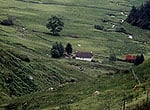
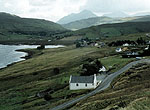
'When the former Account was written [i.e. for the Old Statistical Account of 1799] was written, a considerable number of tacksmen, natives of the parish, occupied extensive farms in different parts of it; and with them a dense population of subtenants resided in the interior straths and glens. Now, however, all the lands, both hill and dale, which they possessed, are held in lease by a few sheep-farmers, all non-resident gentlemen, - some of them living in Caithness, some on the south coast of this county, and some in England; and the straths in which hundreds of families lived comfortably, are now tenanted by about twenty-four families of herds. In place of the scores of Highland cattle, horses, sheep and goats, which formerly were brought to market, or used for domestic purposes, now thousands of fleeces of Cheviot wool, wedders and ewes, are annually exported. The people who had been removed from the interior in 1818 and 1819, when these great changes took place, are thickly settled along the sea-coast of the parish, - in some instances about thirty lotters occupying the land formerly in the possession of twelve, and some of them placed on ground which had been formerly uncultivated.
This alteration in the locality of the parishioners has been followed by a corresponding change in the general system of their occupation. Instead of tending flocks, and following other avocations connected with the habits of an inland population, they are now partly employed in cultivating their small pendicles of land; but more vigorously engaged, especially the young, in preparing the necessary fishing implements, and prosecuting the fishing in its season. The females, in place of manufacturing tartans, and other woollen cloths, for their husbands, brothers and other relatives, now use the spinning wheel in preparing hemp for herring nets; and the labour of the country weaver is considerably set aside by the knitting of the nets. The Garb of Auld Gaul is entirely superseded by the fisherman's habilments; and our population, who in early life traversed the hills, moors and crags of the interior, now cautiously steer their boats on the waves of the Northern Ocean, and actively carry on the various labours connected with the fish-curing stations.
The changes referred to in the locality and in the employments of the inhabitants have had their influence on the state of society in the parish. Altheough there are greater facilities of communication than formerly with different parts of the kingdom, the manners of the resident population are not thereby improved. It is a well authenticated fact in this country, that the herring fishing is not conducive to the improvement of the morals of those engaged in it. The leaseholders of our large sheep-farms are, as was already mentioned, all non-resident gentlemen. But the former tacksmen resided on their own farms, most of them having respectable and numerous families. By their education and status in society, as justices of the peace, and officers in the army, their example, in their general intercourse with the people, had an influence in giving a respectable tone to society, which is now almost gone. There is not now a resident justice of the peace in the parish, whereas there was formerly a most respectable bench of such civil magistrates; and the permanent population being composed of lotters, day labourers, fishermen, and herds, the people in general, are much more plebian, than when the former Account was written ....
There is much room for improvement on the sea-coast, by a better system of husbandry among the lotters, by rendering the landing-laces for boats more commodious and secure, and by an increase of branch roads to some of the townships. It is much to be regretted that the inhabitants have not more permanent and regular employment during the winter months; for by the want of such employment, a great portion of their time is wasted in idleness and dissipation; whereas, they would most willingly avail themselves of any additional opportunities of labour.'
|
|